
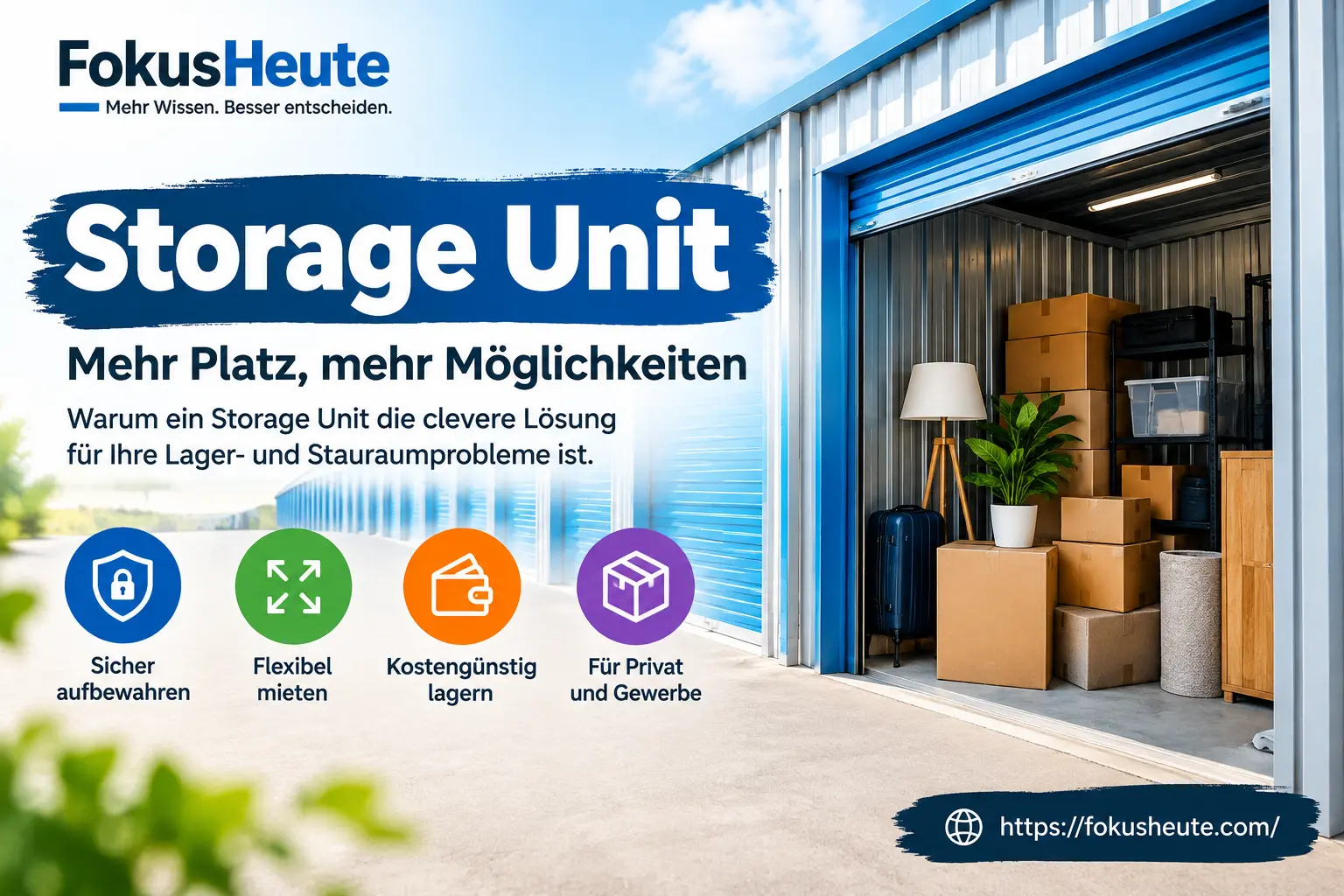
Finding the right storage unit can seem simple until you have to decide how much space you need, what type of facility is suitable, how much you should pay, and how to protect your belongings once they are stored. A storage unit can be useful during a move, home renovation, downsizing, decluttering, business expansion, or simply when your home no longer has enough space.
The important point is that storage is not just about renting an empty room. You need to think about size, accessibility, security, climate, storage duration, pricing, packing, and the type of belongings you plan to keep inside.
This guide explains everything from the basics to the practical details you need before renting. It also covers current 2026 considerations, including changing rental prices, climate-controlled options, drive-up access, local availability, and ways to avoid paying for space you do not actually need.
What Is a Storage Unit?
A storage unit is a private space rented inside a self-storage facility for keeping personal, household, business, seasonal, or other permitted belongings outside your home or workplace.
Units are usually rented for a monthly period, although rental terms differ between facilities. They can range from compact spaces suitable for boxes and seasonal belongings to large spaces capable of holding furniture from several rooms.
A typical facility may offer several combinations of:
- Different unit dimensions
- Indoor or outdoor access
- Drive-up access
- Climate-controlled spaces
- Elevator or first-floor access
- Gated entry
- Security cameras
- Individual locks
- Extended access hours
- Vehicle storage
- Business storage
- Online reservations and payments
The exact features are facility-specific, so two spaces with the same dimensions can provide very different experiences.
What is the difference between self-storage and ordinary storage?
Self-storage generally means you rent an individual space and keep control of your belongings. You normally bring your own items to the facility, lock the space yourself, and access it according to the facility’s rules.
A warehouse storage service can work differently because the company may receive, handle, inventory, or move your belongings for you.
For most people searching for a place to store household items themselves, self-storage is the more relevant option.
How Do Storage Units Work?
The process is usually straightforward:
- Estimate what you need to store.
- Choose an appropriate size.
- Decide which features matter.
- Compare facilities and total prices.
- Check rental terms and restrictions.
- Reserve the space.
- Complete the rental agreement and required identification.
- Move your belongings into the space.
- Lock the unit securely.
- Pay the recurring rent according to the agreement.
Some facilities allow online reservations and digital move-ins, while others require an in-person process.
Before moving anything, confirm the actual unit dimensions, door dimensions, access method, access hours, payment terms, insurance requirements, and prohibited-item policy.
Why does this matter?
Because a unit advertised as 10×10 may have different practical characteristics depending on its ceiling height, door placement, hallway configuration, elevator access, and loading area.
How long does it take to move into a storage space?
A small, well-organized load can sometimes be moved in quickly, while a household move can take several hours or more. The biggest factors are the quantity of belongings, distance from the loading area, elevator availability, vehicle access, and how well everything has been packed.
What Are Storage Units Used For?
People use rented storage spaces for many different reasons.
Common uses include:
- Moving between homes
- Selling a house
- Renovating a property
- Downsizing
- Decluttering
- College or university storage
- Seasonal decorations
- Sports equipment
- Furniture storage
- Business inventory
- Documents and records
- Equipment storage
- Vehicle storage
- Temporary relocation
- Household overflow
Storage can be especially useful when your housing situation changes but you are not ready to sell, donate, or throw away belongings.
For example, someone moving from a large house into a smaller apartment may temporarily keep furniture, boxes, seasonal belongings, and household equipment in rented storage while deciding what to keep.
Storage Unit Sizes
Choosing the correct size is one of the most important decisions you will make.
Storage spaces are commonly described by width × length, such as 5×5, 5×10, or 10×20 feet. The floor area is calculated by multiplying those two measurements.
For example:
5 × 10 = 50 square feet
10 × 10 = 100 square feet
10 × 20 = 200 square feet
But floor area does not tell the whole story. Ceiling height also creates usable volume because boxes and suitable belongings can often be stacked vertically.
Many facilities use ceilings around 8 feet, although height varies by property and unit type. Current storage guides also emphasize that exact dimensions and available sizes differ between facilities.
5×5 Storage Unit
A 5×5 space provides about 25 square feet of floor area.
It is commonly suitable for:
- Several boxes
- Seasonal decorations
- Small furniture
- Clothing
- Sports equipment
- Small household items
- Dorm or apartment overflow
Think of it as roughly comparable to a small walk-in closet rather than a complete room.
It is usually not appropriate for a large amount of furniture.
5×10 Storage Unit
A 5×10 space provides about 50 square feet.
It can be suitable for:
- A bedroom’s furniture
- A studio apartment’s belongings
- A mattress
- Dresser
- Chairs
- Shelving
- Boxes
- Seasonal equipment
The exact amount depends heavily on the size of your furniture and how efficiently you pack.
5×15 Storage Unit
A 5×15 space provides approximately 75 square feet.
It can work well when a 5×10 is too small but a 10×10 would provide more floor width than you need.
Possible contents include:
- Furniture from several areas
- Appliances
- Moving boxes
- Bedroom furniture
- Small business inventory
- Seasonal household items
10×10 Storage Unit
A 10×10 space gives you approximately 100 square feet.
It is one of the most commonly considered sizes for household storage and may accommodate belongings from a small apartment or several rooms, depending on the amount of furniture.
Possible contents include:
- Sofa
- Beds
- Dressers
- Tables
- Chairs
- Appliances
- Shelving
- Numerous boxes
Do not assume that every two-bedroom home automatically fits into a 10×10. Furniture density, appliances, box quantity, and packing technique can make a major difference.
10×15 Storage Unit
A 10×15 space provides about 150 square feet.
It offers substantially more floor space than a 10×10 and can be useful for:
- Larger apartments
- Multiple bedrooms
- Home renovation storage
- Larger furniture collections
- Business inventory
- Household moves
It can be a useful middle option when a 10×10 is too restrictive but a 10×20 would leave excessive unused space.
10×20 Storage Unit
A 10×20 space provides around 200 square feet.
This is closer to the size of a standard one-car garage in floor area and can accommodate considerably more household furniture.
It may be suitable for:
- Multi-bedroom homes
- Large furniture
- Appliances
- Business stock
- Renovation materials
- Large moving projects
Because it is significantly larger, the monthly price can also be substantially higher.
10×25 Storage Unit
A 10×25 space provides approximately 250 square feet.
This larger format can accommodate multiple rooms of household furniture, appliances, home-office equipment, and substantial box quantities. Some facilities also offer this size for larger recreational or vehicle-related storage, depending on the unit design.
10×30 Storage Unit
A 10×30 space provides about 300 square feet.
It is designed for substantial storage requirements, such as:
- Large household moves
- Several bedrooms
- Business inventory
- Large equipment
- Major renovation projects
- Extensive furniture collections
The actual usable capacity depends on ceiling height, door configuration, and the shape of the unit.
Common Storage Unit Sizes
The most common dimensions you will encounter include:
| Size | Approx. Floor Area | Typical Starting Use |
|---|---|---|
| 5×5 | 25 sq. ft. | Closet-sized storage |
| 5×10 | 50 sq. ft. | Small room or studio belongings |
| 5×15 | 75 sq. ft. | Larger apartment overflow |
| 10×10 | 100 sq. ft. | Small apartment or multiple rooms |
| 10×15 | 150 sq. ft. | Larger apartment or household contents |
| 10×20 | 200 sq. ft. | Multi-room household storage |
| 10×25 | 250 sq. ft. | Large household or business storage |
| 10×30 | 300 sq. ft. | Large household or commercial-style needs |
These are planning estimates, not guarantees. Actual capacity varies because furniture dimensions, packing method, ceiling height, door size, and the need for walking space all affect usable capacity. Current 2026 sizing guides similarly describe these dimensions as general planning references rather than fixed capacity guarantees.
Storage Unit Size Guide
A useful way to think about size is by the amount and type of property you are storing.
| Storage Need | Possible Starting Size |
|---|---|
| Seasonal belongings and boxes | 5×5 |
| Small bedroom | 5×10 |
| Studio apartment | 5×10 |
| One-bedroom apartment | 5×10 to 5×15 |
| Two-bedroom apartment | 10×10 to 10×15 |
| Three-bedroom household | 10×15 to 10×20 |
| Large household | 10×20 to 10×30 |
| Business inventory | Depends on inventory volume |
| Vehicle | Depends on vehicle dimensions and facility rules |
These recommendations should be treated as starting points.
A minimalist two-bedroom apartment may require less space than a smaller home filled with bulky furniture, appliances, sporting equipment, and years of accumulated belongings.
What Can Fit in a Storage Unit?
The answer depends on the dimensions of your belongings rather than simply the number of boxes.
For example, a unit may have plenty of floor area for boxes but become difficult to use after you add:
- Sofas
- Mattresses
- Wardrobes
- Dining tables
- Appliances
- Exercise equipment
- Shelving
- Large cabinets
This is why large items should be considered before small boxes.
A useful inventory should include:
Furniture: beds, sofas, tables, chairs, dressers and cabinets.
Appliances: refrigerators, washers, dryers and other permitted equipment.
Boxes: estimate both quantity and average size.
Special items: bicycles, tools, sporting equipment, business equipment or seasonal belongings.
Access requirements: determine whether you need to reach specific items regularly.
What if I have more belongings than expected?
Do not automatically cram everything into a smaller space.
Overpacking can make items difficult to retrieve and can put unnecessary pressure on furniture and boxes. If you need regular access, leave a practical walkway and avoid building an unstable stack.
How to Choose the Right Storage Unit Size
Use a simple five-step process.
1. Make a complete inventory
Walk through every room and write down what you plan to store.
Separate:
- Large furniture
- Appliances
- Boxes
- Fragile items
- Seasonal items
- Business equipment
- Frequently accessed belongings
2. Measure the biggest items
Start with the sofa, mattress, cabinets, tables, appliances and other bulky belongings.
Do not start by counting small boxes alone.
3. Estimate your floor and vertical space
Measure the approximate footprint of your belongings.
You can also consider cubic space because stacking can increase the amount you can store. However, never assume you can safely stack everything to the ceiling.
4. Decide whether you need access
If you will visit frequently, you need a layout that allows you to reach items without unloading the entire space.
5. Compare two nearby sizes
If you are between two sizes, compare their total monthly cost against the value of the additional space.
The goal is not simply to find the smallest possible space.
The goal is to find the smallest practical space that lets you store everything safely and access it when necessary.
Current 2026 storage guidance increasingly emphasizes measuring bulky items first, considering access needs, and planning the layout rather than choosing a size from bedroom count alone.
Storage Unit Cost
The price you pay depends on more than dimensions.
Important pricing variables include:
- Location
- Unit size
- Climate control
- Indoor or outdoor placement
- Drive-up access
- Floor level
- Security features
- Access hours
- Availability
- Local demand
- Promotions
- Insurance or protection requirements
- Administrative fees
- Move-in charges
- Length of rental
This means there is no single universal monthly price.
A 10×10 space in a major metropolitan area can cost considerably more than the same dimensions in a smaller market.
How Much Does a Storage Unit Cost in 2026?
Current 2026 pricing data varies substantially by market and provider. For example, September 2026 data from SelfStorage.com reported an average of $76.75 per month across four common sizes, while other 2026 pricing datasets show substantially wider national ranges depending on size, location, and features.
One 2026 pricing dataset reported approximate national reference rates of:
- 5×5: around $40–$75 for standard space
- 5×10: around $55–$110
- 10×10: around $90–$180
- 10×15: around $125–$240
- 10×20: around $160–$310
Climate-controlled options were generally more expensive in the same dataset. These figures are reference ranges rather than guaranteed quotes because actual local pricing changes by market and facility.
Another 2026 source reported an average street rate of approximately $133 per month across different sizes and markets, illustrating why national averages should not be treated as a quote for a particular location.
What should you ask about the advertised price?
Before choosing a facility, ask:
- Is this an introductory rate?
- What will the regular rate be?
- Is there an administration fee?
- Is a lock required?
- Is insurance or protection coverage required?
- Are there late-payment fees?
- Are there move-in charges?
- Is climate control included?
- Is access included?
- Does the advertised price apply to the exact unit shown?
A low headline price is not necessarily the lowest total cost.
Storage Unit Prices by Size
Larger spaces generally cost more, but the relationship is not perfectly proportional.
A 10×10 space does not necessarily cost exactly twice as much as a 5×10 space because pricing is influenced by local demand, inventory, facility design and features.
As a broad 2026 reference:
| Size | Typical Relative Cost |
|---|---|
| 5×5 | Lower |
| 5×10 | Low to moderate |
| 5×15 | Moderate |
| 10×10 | Moderate |
| 10×15 | Moderate to high |
| 10×20 | Higher |
| 10×25 | High |
| 10×30 | Highest among common household sizes |
Always compare actual local quotes rather than relying solely on national averages.
Factors That Affect Storage Unit Prices
Location
Location can have a major impact on rent.
Facilities in dense urban areas may charge more because land, construction and demand are higher.
A facility slightly outside a city center may offer different pricing while still being convenient enough for your needs.
Size
More floor area usually means higher rent.
However, choosing a larger space than necessary means paying for unused capacity every month.
Climate control
Climate-controlled spaces usually cost more because the facility maintains a more controlled indoor environment.
Access type
Drive-up access, ground-floor placement, elevator access and indoor loading areas can affect pricing and convenience.
Demand and availability
Prices can change when particular sizes become scarce.
A facility may have several large spaces available while having very few small spaces, creating different pricing pressure.
Promotions
Some facilities offer introductory discounts or promotional rates.
Always determine how long the promotion lasts and what the normal rate becomes afterward.
Climate-Controlled Storage Units
Climate-controlled storage is designed to provide a more stable indoor environment than ordinary non-climate-controlled space.
It is especially relevant when storing belongings that can be damaged by large temperature swings or excessive humidity.
Potentially sensitive belongings include:
- Wood furniture
- Leather
- Electronics
- Books
- Important documents
- Photographs
- Artwork
- Musical instruments
- Clothing
- Mattresses
- Collectibles
- Certain business records
Climate control does not mean that every facility maintains identical temperature or humidity conditions. Features vary, so ask the facility exactly what its system controls.
When Do You Need a Climate-Controlled Storage Unit?
Ask yourself:
Are the belongings sensitive to heat, cold, moisture or humidity?
If yes, climate control may be worth considering.
It is particularly useful for long-term storage because belongings may remain exposed to seasonal environmental changes for months or years.
You should strongly consider it for valuable or difficult-to-replace items such as:
- Family photographs
- Artwork
- Antiques
- Wooden furniture
- Leather furniture
- Musical instruments
- Electronics
- Important documents
- Collectibles
- Sensitive fabrics
It may be less important for durable items such as some outdoor equipment, metal tools, or certain plastic goods, especially when the rental is short-term and the local climate is moderate.
The correct choice depends on the item, climate, storage duration and replacement cost.
Is indoor storage automatically climate controlled?
No.
Indoor describes where the space is located.
Climate controlled describes environmental management.
A unit can be indoors without having the same temperature and humidity controls as a climate-controlled facility. This distinction is important when comparing facilities.
Drive-Up Storage Units
Drive-up access allows you to bring your vehicle close to the storage door.
This can make loading and unloading much easier, particularly for:
- Heavy furniture
- Appliances
- Business equipment
- Moving boxes
- Tools
- Frequently accessed belongings
The major advantage is convenience.
Instead of carrying everything through an indoor hallway or using an elevator, you may be able to park directly outside the unit.
When is drive-up access most useful?
Drive-up access is particularly practical when you expect to visit frequently or regularly move heavy items.
However, drive-up spaces are not automatically climate controlled. If environmental protection matters, check both features separately.
Indoor Storage Units
Indoor storage spaces are located inside a building rather than opening directly to an outdoor parking area.
Benefits may include:
- Protection from direct weather during loading
- Indoor corridors
- Elevator access
- Better separation from outdoor conditions
- Potential access to climate-controlled areas
But indoor does not automatically mean climate controlled.
Check the facility’s individual features before renting.
Storage Unit Features
The right space is not only about square footage.
Important features can include:
- Climate control
- Drive-up access
- Indoor access
- First-floor location
- Elevator access
- Wide doors
- Loading docks
- Carts
- Security cameras
- Gated entry
- Individual alarms
- Digital access
- Extended access hours
- Vehicle storage
- Online payments
Think about your daily experience, not just the advertised dimensions.
For example, a cheaper upper-floor space may become frustrating if you regularly move heavy furniture and must use an elevator.
Storage Unit Security
Security features vary considerably between facilities.
Common measures include:
- Gated entry
- Surveillance cameras
- Controlled access
- Individual door locks
- Alarm systems
- On-site management
- Lighting
- Perimeter fencing
But no security feature guarantees that belongings cannot be stolen or damaged.
You should also take responsibility for your own storage practices.
Use a high-quality lock, do not share access codes unnecessarily, keep an inventory, and check the facility’s insurance or protection requirements.
What security questions should you ask?
Before renting, ask:
- Is there controlled gate access?
- Are cameras operating throughout the property?
- Is the facility staffed?
- Are individual units alarmed?
- Is lighting available after dark?
- What happens if access credentials are lost?
- What protection or insurance options are available?
Storage Unit Access Hours
Access hours determine when you can actually reach your belongings.
A facility might have:
Office hours: when staff are available.
Gate access hours: when renters can enter.
These are not necessarily the same.
For example, an office could close in the evening while customers with authorized access can still enter during specified hours.
If you work unusual hours, run a business, or expect frequent visits, access hours should be part of your comparison.
Also check holiday restrictions and whether access changes during emergencies or severe weather.
Storage Unit for Moving
Temporary storage can make a move easier when the timing between two properties does not match.
For example:
You move out of your current home on Friday.
Your new home is not ready until the following week.
Instead of rushing everything into temporary accommodation, you can store the belongings and retrieve them when the new property is ready.
It can also help when:
- Closing dates change
- Renovation delays occur
- A home is being staged for sale
- You are moving to another city
- Family members temporarily need space
- You are downsizing
For moving, prioritize size, access, loading convenience and rental flexibility.
If you expect to visit frequently, a drive-up or easily accessible unit may be worth paying more for.
Business Storage Units
Businesses can use self-storage as supplementary space for:
- Inventory
- Packaging materials
- Seasonal products
- Equipment
- Tools
- Documents
- Trade-show materials
- Marketing supplies
- Small business overflow
Before using a space for business purposes, verify that the facility permits commercial storage and check any restrictions on the type of goods.
For businesses, accessibility can be more important than simply choosing the cheapest monthly rent.
If employees need access, ask whether additional authorized users are allowed and how access credentials work.
Vehicle Storage Units
Vehicle storage can include:
- Cars
- Motorcycles
- Boats
- RVs
- Trailers
The available options can be:
- Enclosed
- Covered
- Uncovered
Not every property accepts every vehicle type.
Before renting, verify:
- Maximum vehicle length
- Maximum height
- Door dimensions
- Parking surface
- Indoor/outdoor conditions
- Access hours
- Registration requirements
- Insurance requirements
- Whether vehicle maintenance is permitted
Never assume a standard household space will accommodate a vehicle simply because the floor area looks large enough.
How to Pack a Storage Unit
Good packing determines how useful the space remains.
Start by preparing belongings before they enter the facility.
Step 1: Clean everything
Dust, dirt, food residue and moisture can create problems during long-term storage.
Step 2: Dry belongings completely
Never pack damp furniture, clothing, appliances or other moisture-sensitive items.
Step 3: Disassemble suitable furniture
Remove legs, shelves or other detachable components when safe to do so.
Keep screws and small hardware in labeled bags.
Step 4: Use appropriate containers
Strong boxes and suitable plastic bins can protect belongings better than weak or damaged cartons.
Step 5: Label every box
Write both the contents and destination area.
For example:
Kitchen — Small Appliances
is much more useful than:
Box 14
Step 6: Protect furniture
Use breathable furniture covers or moving blankets where appropriate.
Avoid tightly wrapping some furniture in non-breathable plastic because trapped moisture can contribute to mold or mildew.
Step 7: Keep a walkway
If you will need regular access, do not fill every inch.
A small aisle can save hours later.
How to Organize a Storage Unit
Think of the space like a small room rather than a box.
Place:
Frequently needed items → near the front
Rarely needed items → toward the back
Heavy items → low
Fragile items → protected and stable
Large furniture → positioned to preserve usable pathways
Create a simple map of where everything is located.
For example:
Front left: seasonal clothing
Front right: frequently accessed boxes
Center: walkway
Back: large furniture
This makes future visits much easier.
How to Maximize Storage Unit Space
You can increase usable capacity without simply renting a larger space.
Use vertical space
Stack suitable boxes carefully, while keeping heavier boxes toward the bottom.
Use furniture as storage
Drawers, cabinets and suitable empty furniture can hold smaller belongings.
Disassemble furniture
A table that is flat-packed takes less practical space than a fully assembled table.
Use uniform boxes
Boxes with similar dimensions stack more efficiently.
Leave access space
Maximum capacity is not the same as maximum usefulness.
If everything is packed so tightly that you cannot reach anything, you may have saved floor space but created a major access problem.
Keep moisture-sensitive items protected
Use suitable containers and breathable furniture protection, and consider climate control where appropriate.
Current storage guidance also emphasizes organization, airflow, access and avoiding moisture-trapping materials when packing.
For the latest, updated, and unique information, visit medical assistant.
What Can You Put in a Storage Unit?
Generally permitted belongings can include:
- Furniture
- Clothing
- Household goods
- Books
- Appliances
- Sports equipment
- Seasonal decorations
- Business inventory
- Tools
- Documents
- Bicycles
- Certain recreational equipment
However, permitted items depend on the facility’s contract and local rules.
Before moving anything in, read the facility’s prohibited-item list.
Can you store furniture?
Usually, yes, provided the furniture is permitted by the facility and prepared correctly.
For long-term storage, clean and dry furniture first. Protect upholstered, wooden and leather pieces appropriately, and consider environmental conditions.
Can you store electronics?
Electronics are generally sensitive to temperature and humidity fluctuations, so climate-controlled storage can be a better choice, especially for long-term storage.
What Cannot Be Stored in a Storage Unit?
Prohibited items commonly include:
- Flammable materials
- Explosives
- Fuel
- Propane
- Hazardous chemicals
- Toxic materials
- Perishable food
- Living animals
- Living plants
- Illegal goods
- Stolen property
The exact list varies by provider and contract.
For example, major self-storage policies commonly prohibit hazardous, illegal, perishable and living items.
Do not assume that an item is acceptable simply because it is legal to own.
A facility’s rental agreement can impose additional restrictions.
Can you live in a rented storage space?
No.
Storage spaces are intended for storing belongings, not for living or establishing a residence. Facility policies generally prohibit using them as living or working spaces.
Can you store food?
Perishable food is generally prohibited because it can spoil and attract pests.
Even where a specific facility permits certain sealed goods, check the contract before storing food.
How to Rent a Storage Unit
The process can be broken down into a few practical steps.
1. Determine what you need to store
Make your inventory before searching.
2. Estimate the size
Use your largest belongings, box quantity and access needs.
3. Decide on features
Determine whether you need:
- Climate control
- Drive-up access
- Indoor access
- Vehicle storage
- Extended access
- Enhanced security
4. Compare local facilities
Compare the total price, not only the promotional rate.
5. Read the agreement
Check payment terms, increases, access rules, restrictions, insurance requirements and cancellation procedures.
6. Reserve the space
Depending on the provider, you may be able to reserve online, by phone or in person.
7. Prepare your belongings
Clean, dry, pack and label everything before move-in day.
8. Move in and secure the space
Use the correct lock and follow facility access procedures.
What Do You Need to Rent a Storage Unit?
Requirements differ by facility and location, but you may need:
- Government-issued identification
- Contact information
- Payment method
- Rental agreement
- Required insurance or protection coverage
- Lock
- Vehicle information for certain vehicle spaces
Some providers also have minimum age requirements. For example, Public Storage states that renters must be at least 18 and have valid government-issued identification.
Always verify the exact requirements with the facility you choose.
How Long Can You Rent a Storage Unit?
Rental periods depend on the provider.
Many facilities offer flexible month-to-month arrangements, while others may have different contractual terms.
Before signing, ask:
- Is the agreement month-to-month?
- Is there a minimum rental period?
- Can I move out at any time?
- How much notice is required?
- How are partial months handled?
- Can the monthly rate change?
- What happens after the promotional period?
If you only need storage for a few weeks or months, flexibility can be more important than a small difference in advertised monthly rent.
For long-term storage, calculate the total cost over 12 months rather than focusing only on the first month’s promotion.
How to Find a Storage Unit Near You
Start with your location and then narrow the search by your actual requirements.
Instead of searching only for:
storage near me
consider combinations such as:
- self-storage near me
- climate-controlled storage near me
- drive-up storage near me
- small storage spaces near me
- business storage near me
- vehicle storage near me
Then compare the facilities based on:
- Distance
- Price
- Size availability
- Access hours
- Climate control
- Security
- Loading convenience
- Reviews
- Rental terms
Is the closest facility always the best choice?
Not necessarily.
A facility five minutes farther away may have a significantly better size, access arrangement, security setup or total price.
For belongings you access every week, distance matters more than it does for items you visit twice a year.
How to Compare Storage Units in Your Area
Create a simple comparison table before deciding.
| Factor | Facility A | Facility B | Facility C |
|---|---|---|---|
| Monthly price | $79/month | $99/month | $69/month |
| Regular price after promotion | $119/month | $139/month | $109/month |
| Size available | 5×5 to 10×30 | 5×5 to 10×30 | 5×10 to 10×25 |
| Climate control | Yes | Yes | Limited |
| Drive-up access | Yes | No | Yes |
| Access hours | 6 AM–10 PM | 6 AM–9 PM | 7 AM–9 PM |
| Security | Gated access + cameras | Gated access + cameras | Gated access + cameras |
| Insurance/protection | Available | Required/available | Available |
| Admin fees | $25 | $29 | $20 |
| Lock requirement | Customer lock | Disc lock required | Customer lock |
| Cancellation terms | Month-to-month | Month-to-month | Month-to-month |
| Distance | 1.2 miles | 2.4 miles | 0.8 miles |
This prevents one attractive feature from hiding an important cost or limitation.
What should matter most?
That depends on your situation.
For frequent access, prioritize convenience.
For sensitive belongings, prioritize environmental protection.
For a short move, prioritize flexibility.
For business inventory, prioritize accessibility and operating convenience.
For valuable belongings, examine security and protection coverage carefully.
Common Storage Unit Mistakes to Avoid
Choosing the size based only on bedroom count
Two homes with the same number of bedrooms can contain completely different amounts of furniture.
Choosing the cheapest advertised rate
The introductory price may not represent the normal monthly cost.
Ignoring access needs
A space that is difficult to reach can become frustrating when you need something urgently.
Packing without an inventory
You may eventually forget where specific items are located.
Filling every inch
A completely packed space may be difficult or unsafe to navigate.
Storing damp belongings
Moisture can create serious problems during long-term storage.
Using unsuitable plastic wrapping
Some non-breathable wrapping can trap moisture around furniture.
Forgetting prohibited-item rules
Always check the rental agreement before bringing questionable items.
Failing to consider climate
Hot, cold or humid conditions can affect sensitive belongings.
Not checking the regular rate
A promotional first month does not tell you what you will pay over an entire year.
Not checking the door dimensions
A unit may have enough floor area but still be inconvenient for large furniture if the entrance is restrictive.
Storage Unit Checklist Before Renting
Use this checklist before signing an agreement.
Space
- Have I listed everything I need to store?
- Have I measured the largest items?
- Have I estimated the number of boxes?
- Have I compared two nearby sizes?
- Will I need a walkway?
Environment
- Do I need climate control?
- Are my belongings sensitive to humidity?
- Will I store furniture, electronics, documents or collectibles?
Access
- What are the access hours?
- Is the unit on the ground floor?
- Is there elevator access?
- Can I drive close to the door?
- Are carts available?
Security
- Is there controlled entry?
- Are cameras used?
- Is the property well lit?
- Does the unit require a specific lock?
- What protection options are available?
Cost
- What is the normal monthly rate?
- Is there an introductory discount?
- Are there administration fees?
- Is a deposit required?
- Are there insurance or protection costs?
- What happens if the monthly rate changes?
Rules
- What items are prohibited?
- Are business goods permitted?
- Are vehicles permitted?
- Can another person access the space?
- What are the move-out requirements?
Packing
- Are belongings clean and dry?
- Are boxes labeled?
- Are fragile items protected?
- Are heavy boxes placed safely?
- Have I created an inventory?
- Have I planned the layout?
A few minutes spent on these questions can prevent much larger problems later.
FAQs
What is a storage unit used for?
A storage unit provides rented space for keeping permitted belongings outside your home or business. Common uses include moving, downsizing, renovation, decluttering, seasonal storage, business inventory and temporary relocation.
What size storage space do I need for a one-bedroom apartment?
A 5×10 or 5×15 space can be a useful starting point, but the correct choice depends on furniture size, appliances, box quantity and packing method. Measure your belongings before renting.
What size storage space is best for a two-bedroom home?
A 10×10 or 10×15 space may work for many two-bedroom households, but there is no universal answer. A home with bulky furniture or extensive belongings may require more space.
How much does storage cost in 2026?
Prices vary widely by city, size, availability and features. Current 2026 sources show national reference prices ranging from relatively low monthly rates for small spaces to several hundred dollars for larger or premium spaces. Local pricing should be checked before making a decision.
Is climate-controlled storage worth the extra cost?
It can be worthwhile for temperature- or humidity-sensitive belongings, particularly when they will remain stored for several months or longer. Wood furniture, electronics, documents, photographs, artwork and certain fabrics are examples of items that may benefit from a more stable environment.
Is indoor storage the same as climate-controlled storage?
No. Indoor describes the physical location of the space, while climate control refers to environmental management. An indoor space is not automatically climate controlled.
What is drive-up access?
Drive-up access allows you to park a vehicle close to the storage door, making it easier to load and unload heavy or bulky belongings.
Can I store furniture?
Furniture is commonly stored in self-storage, but it should be cleaned and completely dry before storage. Sensitive wood, leather and upholstered pieces may benefit from climate-controlled conditions.
Can I store electronics?
Electronics can be sensitive to temperature and humidity changes. For valuable or long-term storage, a climate-controlled environment can provide additional protection.
Can I store food?
Perishable food is generally prohibited because it can spoil and attract insects or rodents. Always check the specific facility’s rules before storing any food.
Can I store plants or animals?
No. Living plants and animals are generally prohibited in self-storage facilities.
Can I store fuel or propane?
Hazardous and flammable materials such as fuel and propane are generally prohibited. The exact restrictions are specified in the rental agreement.
Can I live in a rented storage space?
No. Self-storage spaces are designed for storing belongings and are not residential spaces. Facility policies generally prohibit living inside them.
Can a business use self-storage?
Many facilities offer commercial or business storage for inventory, equipment, records and supplies. Confirm that commercial use and your specific type of goods are permitted before renting.
How should I organize my belongings?
Put frequently needed belongings near the entrance, heavier items lower down, fragile items in protected positions, and rarely needed belongings toward the back. Leave enough space to reach important items.
Should I leave a walkway?
If you expect to access the contents during the rental period, yes. A small aisle can make retrieval dramatically easier and can prevent you from having to unload the entire space.
How do I avoid paying for too much space?
Inventory your belongings, measure bulky items, estimate box quantities and compare nearby sizes. Do not automatically choose a large space just because you want extra room.
How do I find affordable storage near me?
Compare several nearby facilities using the total monthly cost rather than the advertised introductory price. Consider size, access, climate control, fees, security and the distance you will travel.
Can the monthly price change after I rent?
It can depend on the provider and rental agreement. Some companies may offer price locks or promotional periods, while others reserve the right to change rates according to their terms. Read the agreement carefully before signing.
Do I need insurance for my belongings?
Requirements vary by facility and location. Some providers require customers to have insurance or participate in a protection program, while others may allow existing homeowners or renters insurance to cover stored belongings. Confirm the exact terms before renting.
How often should I visit long-term storage?
There is no universal schedule, but periodic inspections can help you notice moisture, pests, damage or other problems early. More frequent checks can be sensible for sensitive or valuable belongings.
What should I do before putting furniture into storage?
Clean and dry it thoroughly, disassemble it where appropriate, protect it with suitable breathable covers or moving blankets, and keep it elevated from the floor when appropriate.
How can I make a small storage space hold more?
Use sturdy stackable boxes, disassemble furniture where possible, use suitable internal storage space, place heavy items at the bottom, and organize belongings vertically without creating unsafe stacks.
Conclusion
Choosing storage becomes much easier when you stop thinking only about square footage and start considering the complete storage experience.
The right choice depends on what you are storing, how much you have, how often you need access, how long you will keep it, what the local climate is like, and which facility features actually matter to you.
Start with an inventory, measure your largest belongings, estimate your required space, and compare two nearby sizes instead of guessing. Then evaluate climate control, drive-up access, security, access hours, pricing, fees and rental terms.
For short-term moving storage, convenience and flexibility may be the priority. For long-term storage of sensitive belongings, environmental protection can become more important. For businesses, accessibility and operational convenience may matter most.
Most importantly, do not choose based solely on the cheapest advertised price or the biggest available space. A well-sized, properly organized and appropriately protected storage solution can save money, reduce frustration and keep your belongings easier to access throughout the rental period.
For the latest, updated, and unique information, visit french braid.


One thought on “Storage Unit Guide 2026: Sizes, Costs, Types & Rental Tips”